This Week in Midweek Updates
Sling announces development of low wing twin and MOSAIC 2M trainer.
Van's Aircraft delivers the world's first MOSAIC-certified aircraft.
AERO South Africa is back!
Aselsan's Aselflir-500 integration with the Paramount Mwari underscores South Africa's growing aerospace capabilities.
FAA issues Heart Aerospace special airworthiness certificate for X1 demonstrator aircraft.
Qantas Project Sunrise test aircraft touch down in Australia.
Uganda Airlines places first Boeing order for 737 MAX and 787 Dreamliner Jets.
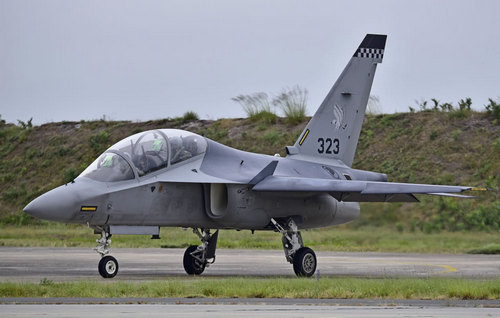
CAE and Leonardo expand collaboration to advance m 346 training.
This week in history - Born on 18 July 1921 John Herschel Glenn Jr flew the first supersonic transcontinental flight.
Worldwide Incidents and Accidents.
Bonus video - MX2 A2A Shoot.
Sling Announces Development of Low Wing Twin and MOSAIC 2M Trainer
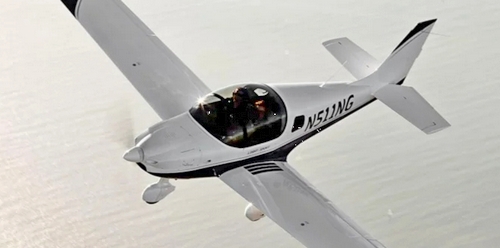
Sling's James Pittman at Oshkosh announced that the company is developing a twin engine low wing twin.
The company also introduced it's Sling 2M, a MOSAIC-compliant version of its NGT flight trainer that raises the maximum gross weight, adds IFR capability and comes standard with Garmin's new AXIS flight deck.
The Sling 2M has a maximum gross weight of 1,540 pounds and a useful load of more than 600 pounds. According to the company the aircraft will be to carry two large adults, a whole-airframe parachute and enough fuel for more than eight hours of flying.
Sling said the 2M's added useful load should give added flexibility to carry a wider range of students while keeping the parachute installed and avoiding frequent refueling between lessons.
The Sling 2M will come with Garmin's AXIS Flight System as standard equipment. Garmin introduced AXIS earlier in July as a new integrated avionics family for certified, experimental and light-sport aircraft. Depending on its configuration, the system can combine flight displays, IFR GPS, navigation and communication radios and audio-panel functions.
The Sling 2M is based on the existing NGT trainer rather than an entirely new aircraft. It retains the NGT's 100-horsepower Rotax 912 iS engine and three-blade, ground-adjustable DUC propeller.
Van's Aircraft Delivers the World's First MOSAIC-Certified Aircraft
The MOSAIC-certified RV-12iS becomes the first aircraft in history to receive an airworthiness certificate under FAA MOSAIC Part 22. Flight schools are already putting it to work for IFR training, starting at $246,200.
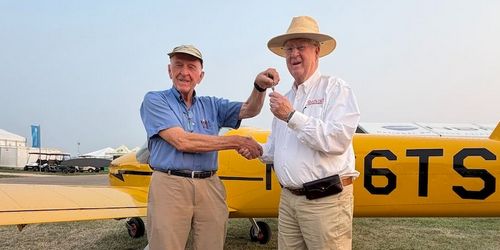
Van's Aircraft founder Richard VanGrunsven (left) hands over the keys to the first MOSAIC aircraft ever delivered to Tom Snow, who chose the Cub Yellow scheme as a tribute to the iconic trainer.
More RV history was made at EAA AirVenture 2026. Van's Aircraft delivered the world's first MOSAIC Part 22-certified aircraft, cementing the company's place at the forefront of a new era for General Aviation. The MOSAIC-certified RV-12iS, trusted by over 40 flight schools that have amassed more than 100,000 training hours nationwide, didn't just meet the moment. It defined it. Starting at $246,200, the IFR equipped RV-12 MOSAIC aircraft delivers next-generation flight training capability at a price that makes fleet expansion achievable for flight schools of every size. And unlike other training aircraft still on the drawing board, it's delivering now.
AERO South Africa is back!
Following the incredible success of AERO South Africa 2026, we're excited to announce that the next edition will take place from 9 - 11 June 2027.
Over three unforgettable days this year, the aviation community came together to experience impressive aircraft displays, live flying demonstrations, cutting-edge aviation technology, insightful industry discussions, valuable networking opportunities, and inspiring youth development initiatives.
The energy, innovation, and connections made throughout the event reminded us why AERO South Africa continues to be a leading platform for general aviation on the continent.
See you in 2027!
The AERO South Africa Team
Details:
Date: 09 -11 July 2027
Venue: Lanseria International Airport
Aselsan's Aselflir-500 integration with the Paramount Mwari underscores South Africa's growing aerospace capabilities
By DefenceWeb www.defenceweb.co.za
Durability, adaptability, and flexibility are some of the key characteristics that have come to define the South African aerospace and defence sector and its systems. The arrival and successful integration of Aselsan's Aselflir-500 electro-optical targeting system in South Africa onto the locally developed Mwari aircraft not only strengthens this reputation, but demonstrates the potential of a broader model for local capability development; one that sees locally developed platforms more readily integrate internationally developed subsystems, creating a more comprehensive, operationally relevant, and globally competitive offering.
For aerospace and defence manufacturers in South Africa and beyond, this more collaborative approach to system design holds a number of potentially significant benefits that could enable local manufacturers to take full advantage of the opportunities present in the global defence market. These range from reduced research and development costs to exposure to new export opportunities.
According to Aselsan the inbuilt flexibility and scalability of the Mwari has proved an ideal fit for the company's wide range of radars, sensors, avionics, electro-optics and electronic-warfare systems, with the successful integration of the Aselflir-500 representing a particularly notable expansion of the aircraft's capabilities.
Aselsan describes the Aselflir-500 as a high-performance electro-optical reconnaissance, surveillance, and targeting solution for both manned and unmanned aerial platforms. Housed in a 15-inch gimbal turret, the Aselflir-500 features a single 220 mm aperture that combines a high-resolution mid-wave infrared camera, a high-definition day TV camera, and a high-definition short-wave infrared (SWIR) channel with laser range-finding, laser designation, target tracking, and precision stabilisation, delivering class-leading range performance that makes it competitive even with larger units despite its more compact size. Each unit measures 480 mm by 520 mm and weighs approximately 54 kg.
Featuring vibration-damping four-axis gimbals coupled with two-axis optics stabilisation, the Aselflir-500 is able to keep a target locked in frame through steep depression angles. It also boasts an internal boresight module to more easily correct sensor misalignment, while the laser designator and range-finder, rated to roughly 35 km, can guide NATO-coded munitions to their targets. Supporting this is an advanced, AI-enhanced, image-processing capability that operates across the optical channels, significantly extending and improving the unit's detection and identification range.
Since going into serial production in 2024, the Aselflir-500 has already experienced notable commercial success, having been integrated into a number of aerial systems, including the Bayraktar TB2 and Bayraktar TB3, among other unmanned aerial vehicles, resulting in exports to over 20 countries. Consequently, its integration into the Mwari represents not just an opportunity for Aselsan to expand into new markets, but also holds the potential to create new opportunities for Paramount and the Mwari programme in markets more familiar with Aselsan's capabilities.
This kind of integration matters because it shifts the conversation from individual components to complete mission capability. It is not simply about an aircraft or a sensor in isolation; it is about how a platform, payload, market access, and operational concept come together in a way that is useful to the end user.
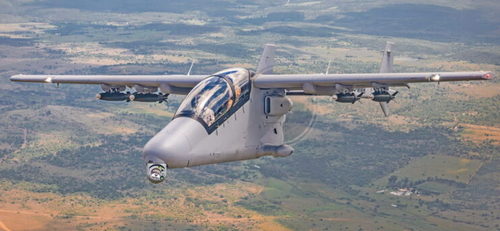
The Mwari embodies this approach. Developed by Paramount Aerospace Industries, the two-crew light multi-role aircraft is built around open architecture, plug-and-play integration, and an interchangeable multi-mission pod system, enabling the aircraft to carry a variety of weapons, sensors and systems.
As a result, operators are not locked into any one configuration, instead they are able to rapidly reconfigure the aircraft for intelligence, surveillance and reconnaissance (ISR), border or coastal patrol, counter-insurgency, and precision strike missions as and when required, all while maintaining a relatively low logistical footprint. This flexibility not only allows the aircraft to be adapted to meet often fast-changing operational requirements, but it significantly reduces the cost and complexity of future capability upgrades.
The Mwari is powered by a single Pratt & Whitney PT6A-66B turboprop engine, enabling the aircraft to achieve a maximum cruise speed of 230 knots with a service ceiling of 21 000 feet, and a maximum mission range of 1 150 nautical miles, all while carrying a payload of up to 1 000 kg across its six underwing hardpoints.
For South African aerospace and defence manufacturers such as Paramount, this collaboration demonstrates how integrating internationally developed subsystems with locally designed platforms can create a more capable and globally competitive offering.
Aselsan's message is clear: the South African defence industry's future competitiveness is likely to hinge on its ability to combine several key factors into one coherent offer: local platform innovation, advanced subsystem integration, agile engineering capability, operational adaptability and scalable export support. Aselsan is confident that it and its South African partners, through their platform design capabilities, engineering depth, and deep local and regional operational knowledge, are well placed to do just that.
The broader lesson, as Aselsan's and Paramount's collaboration illustrates, is that international partnership does not have to undermine local capability, when managed strategically, it can expand integration expertise, strengthen industrial credibility and open access to wider markets.
FAA Issues Heart Aerospace Special Airworthiness Certificate for X1 Demonstrator Aircraft
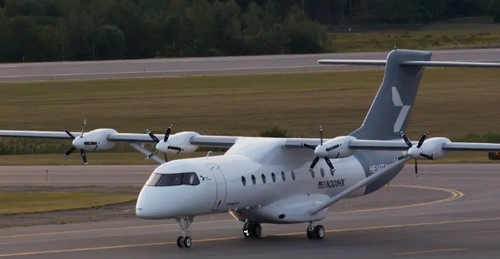
Heart Aerospace announced that the Federal Aviation Administration (FAA) has issued a Special Airworthiness Certificate in the Experimental Category (SAC-EC) for its X1 demonstrator aircraft. The certificate authorizes Heart to commence flight testing of the X1 immediately.
The FAA issued the certificate following an inspection of the aircraft at Heart's X1 flight-test base at Plattsburgh International Airport in upstate New York, where the demonstrator is undergoing final preparations for its first flight. As part of its review, the agency evaluated the aircraft, supporting technical documentation, and Heart's proposed flight-test operations. The certificate marks the culmination of more than a year of collaboration between Heart Aerospace and the FAA.
Receipt of the SAC-EC follows Heart's extensive X1 ground testing program, which included structural, propulsion, systems, and low- and high-speed taxi tests. Together, these activities demonstrated the aircraft's readiness to proceed to piloted flight testing.
“Earning FAA flight authorization brings the X1 program to the threshold of first flight,” said Anders Forslund, Founder and CEO of Heart Aerospace. “This achievement reflects the rigor of the work completed by Heart's engineering and flight-test teams, as well as the close working relationship we have built with the FAA. With our certificate now in hand, our full focus is on flight. We are ready to get X1 in the air.”
With a wingspan of 106 feet, a fuselage length of 76 feet, and a takeoff weight of more than 25,000 pounds, X1 is expected to be the largest electric aircraft ever flown. Developed as a full-scale demonstrator for Heart's ES-30 production aircraft, a 30-seat hybrid-electric regional airliner, X1 will validate flight characteristics, demonstrate key technologies, and generate operational data and insights to support the ES-30's continued development.
Qantas Project Sunrise Test Aircraft Touch Down in Australia
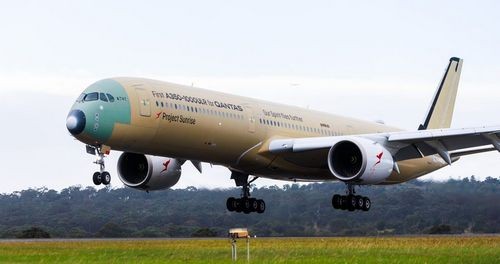
The Airbus A350-1000ULR set to conquer the final frontier of long-haul travel will landed on Australian soil for the first time as the flight test campaign for Project Sunrise reaches a major milestone.
From October 2027, these aircraft will operate Qantas' world-first non-stop services between Sydney and London, the longest non-stop commercial flights in the world.
The test flight from Toulouse was operated by four Airbus flight test pilots and five flight test engineers, who are putting the aircraft's systems through their paces, including the additional 20,000-litre fuel tank that allows it to fly commercially non-stop for up to 22 hours.
The return flight to Toulouse will depart Melbourne on Monday 27 July as part of the Airbus flight test program. Two Qantas pilots will join the Airbus flight test crew on board for the journey back to France.
The aircraft completed its first flight on 2 June 2026. In the weeks since, Airbus' test teams have carried out extensive testing on the ground and in the air in Toulouse, including of the aircraft's redesigned fuel system.
The first A350-1000ULR painted in the Qantas livery, named Vega, continues to take shape on the Airbus final assembly line. Vega will be the first Project Sunrise aircraft delivered to Qantas, in April 2027.
Qantas' world-first non-stop services between Sydney and London will save customers up to four hours compared with the fastest one-stop service today. These historic ultra-long-haul services will operate alongside Qantas' existing Perth-London and Sydney-Singapore-London services. The first Project Sunrise Sydney to London services will go on sale in February 2027.
Uganda Airlines Places First Boeing Order for 737 MAX and 787 Dreamliner Jets
Boeing [NYSE: BA] and Uganda Airlines announced that the national carrier is ordering four 737-8 and four 787-9 airplanes to grow and modernize its fleet. The airline's first-ever Boeing airplane purchase will support growing demand across its regional and international network.
"This commitment with Boeing marks a defining step in Uganda Airlines' growth journey and in our broader ambition to position Entebbe as a strategic aviation hub for the region," said Ato Girma Wake, Uganda Airlines CEO. "The aircraft will strengthen our ability to connect Uganda more efficiently to regional, continental and international markets, while supporting trade, tourism, investment and cargo development."
The 737-8, which can fly 160-180 passengers in a two-class configuration with a range up to 3,500 nautical miles (6,480 km), is well-suited for Uganda Airlines' intra-Africa routes and service to the Middle East and India. With a range up to 8,300 nautical miles (15,370 km), the 787-9 will support the airline's high-demand long-haul routes to the Middle East, Asia and Europe.
The airline currently flies to 17 destinations in 13 countries from its hub in Entebbe, Uganda.
CAE and Leonardo Expand Collaboration to Advance M 346 Training and Develop Next Generation Integrated Training Capabilities
CAE and Leonardo recently announced a collaboration agreement that leverages their long standing partnership on the M 346 Integrated Training System (ITS). The agreement strengthens the cooperation, addressing market opportunities in advanced fighter pilot training and establishes the development of advanced capabilities to prepare pilots for evolving operational concepts, including latest and next generation air operations, AI-enabled systems, and increasingly autonomous mission environments.
The agreement reflects the continued growth of the CAE-Leonardo relationship and expands its scope into Live, Virtual and Constructive (LVC) and Live Synthetic Integration (LSI) environments. Together, the companies will collaborate on a technology roadmap that advances the M-346 ITS, including the Block 20 system features.
The International Flight Training School (IFTS) in Decimomannu, Sardinia, the Italian Air Force advanced training school powered by Leonardo in collaboration with CAE, stands as a proven example of the CAE-Leonardo partnership, delivering one of the world's most integrated fighter jet training environments for complex, next generation operational missions. By combining live flight training, advanced simulation, and mission rehearsal, supported by data driven instruction, IFTS demonstrates how integrated training solutions can accelerate and sustain mission readiness.
The integrated training approach demonstrated at IFTS also reflects a growing need for greater interoperability among allied air forces. Training environments such as IFTS enable pilots from different nations to train together using common standards, tactics and mission scenarios, strengthening operational cohesion across NATO and partner forces. Advanced simulation further allows pilots to experience complex operational scenarios repeatedly and safely, accelerating learning while improving preparedness for real world missions.
16 July 1957
Born on 18 July 1921 John Herschel Glenn Jr flew the first supersonic transcontinental flight. At that time, the transcontinental speed record, held by an Air Force Republic F-84 Thunderjet, was 3 hours 45 minutes and Glenn calculated that the F8U Crusader could do it faster. He flew an F8U Crusader 2,445 miles (3,935 km) from Los Alamitos, California, to Floyd Bennett Field in New York City in 3 hours, 23 minutes and 8.3 seconds averaging supersonic speed despite three in-flight refueling. His on-board camera took the first continuous, transcontinental panoramic photograph of the United States.
He received his fifth Distinguished Flying Cross for this mission and was promoted to lieutenant colonel on April 1, 1959. He passed away on 8 December 2016
DRC, near Kitshanga/Walikale: A TRACEP-Congo Aviation Let L-410, 7Q-GMR, lost contact about ten minutes after takeoff from Beni (BNC). The crew had reported they had lost power on one engine and were returning to BNC. The plane crashed into a forest, the captain was reported to have survived. Some reports claim that there were three occupants on board the plane, of which two occupants survived the crash.
Germany, Ganderkesee: A Tecnam P2010 TDI, D-EYJK,crashed into a house on approach to runway 26 at Ganderkesee Airfield. Two people aboard the aeroplane perished while the house was unoccupied at the time. ADS-B data indicate that the Tecnam took off from runway 26 at 10:51 and flew an airfield circuit. At the same time a Robin R3000/160, D-EVTE, was approaching Ganderkesee Airfield. Just as the Robin had turned from base leg to final approach for runway 26, the Tecnam, was about to do the same. The Tecnam then began a 360 degree turn and lost altitude. It impacted the roof of a house at 10:55, about 1100 m short of the threshold of runway 26.
China: Ulan County, Haixi Prefecture, Qinghai Province: A Harbin XLI (Celier Xenon) gyroplane, registered B-72HX, was involved in an accident at the tourist attraction area of Chaka Salt Lake in Ulan County, Haixi Prefecture, Qinghai Province, China. The aircraft was flying close to other gyroplanes at an altitude of less than 100 meters when it came down, crashing onto two tourists on the ground. The aircraft was substantially damaged and the two people on the ground were injured. There were no casualties aboard (the number of occupants was unknown).