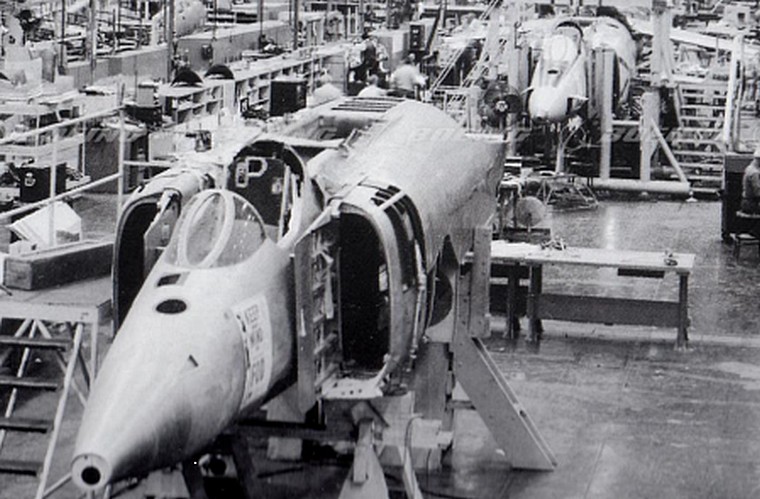
In 1972, the US Navy issued a request for proposals for a next generation supersonic V/STOL fighter/attack aircraft to be based abroad its proposed Sea Control Ships. Rockwell and Convair both responded, Convair, with its Model 200 and Rockwell with the XFV-12A. Rockwell's concept, despite it being considered risky, was awarded a $47 million contract in to develop two XFV-12s. The aircraft, on paper, looked better than the British Harrier the only VTOL fighter jet then in service.
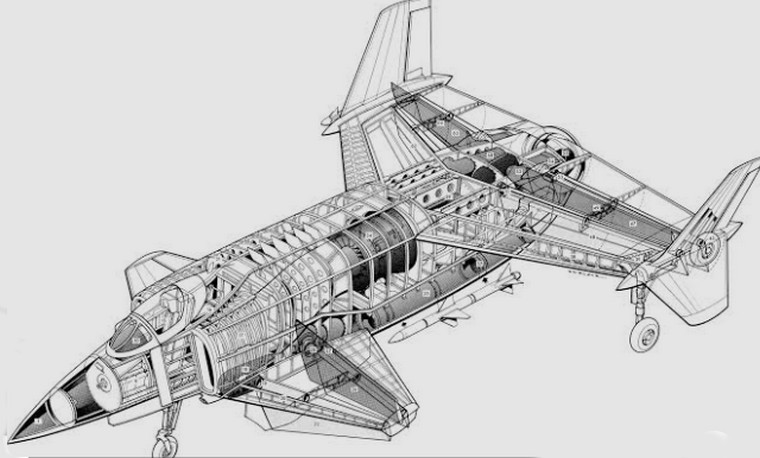
To reduce development costs, Rockwell decided to use the nose section from the Douglas A-4 Skyhawk and air intakes air intakes from the F-4. Pratt & Whitney F401-PW-400 afterburning turbofan engine rated at 30,000 lbf (130 kN) with afterburner was to be the power plant of choice.
Engine rig testing began in 1974 while free-flight model tests conducted at the NASA Langley full-scale wind tunnel started. The test showed that the projected thrust augmentation levels were highly optimistic, and that the aircraft would most likely be incapable of vertical flight on the thrust available.
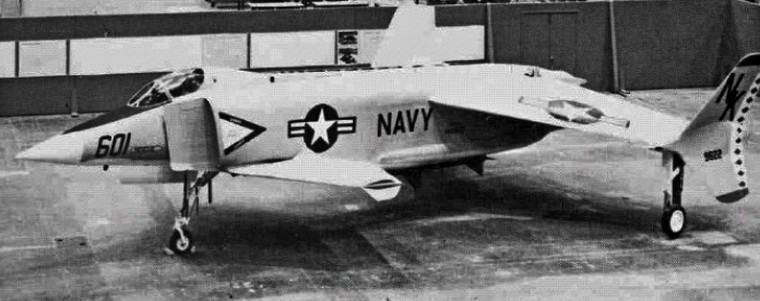
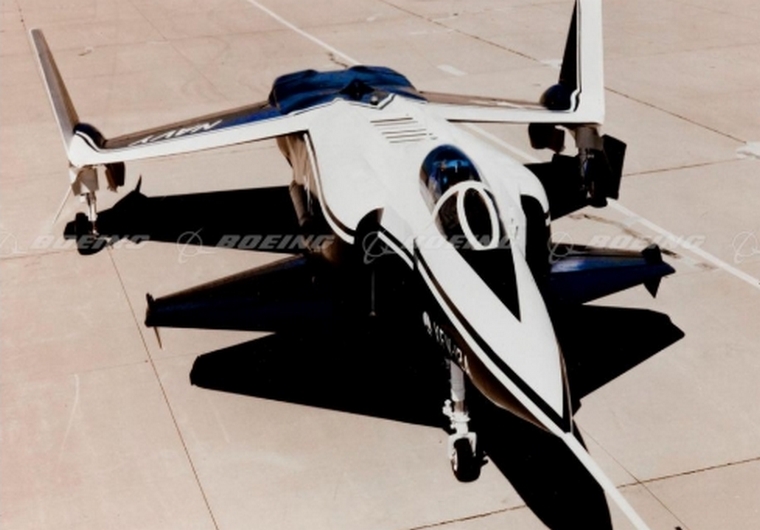
In July 1977 the XFV-12A was officially revealed. It had the looks. The aircraft was 43 feet long and had a wingspan of 28 feet. At 10 feet tall, empty it weight 13,800 lb, with a gross weight of 19,500 lb. It used a special wing design that increased lift by directing exhaust through openings in the wings, similar to how venetian blinds work. This design limited the ability to carry weapons to areas under the narrow fuselage and two missile mounts on the wings.
During 1978 over a course of six months extensive tethered hover tests were conducted. The results were not good at all. it was determined that the XFV-12A design suffered from major deficiencies with regard to vertical flight. While the augmenters did work as expected, the extensive ducting of the propulsion system degraded thrust, and in the end the power-to-weight ratio was such that the engine was capable of vertically lifting only 75% of the weight of the aircraft.
By then the program suffering from serious cost overruns as well as a strategic shift toward larger carriers the Navy decided that further development was just not feasible and in 1981 cancelled the project. The Corps eventually adopted the subsonic British-designed Harrier.