Midweek Updates 04 November 2026
Compiled by Willie Bodenstein
Google Banner Ad
This Week in Midweek Updates
The Aero Club of South Africa.
KFA introduces the Bushbaby Safari NWT (Nose Wheel Trainer).
A very special congratulations to Captain Karl Jensen!
Why the SANDF should consider drones for battlefield resupply.
Kenyan Army receives MD500s from South Korea.
No runway required: Electra takes off and lands ultra-short airplane at Manhattan Heliport.
FAA clears ALIA A250 for customer demonstration flights.
Avior Labs unveils Callisto, its next-generation AI-driven autonomous VTOL drone.
Lockheed Martin to add air-launched hypersonic missile to the American Arsenal of Freedom.
The International Air Transport Association (IATA) hss Released New Data Demonstrating the Rising Cost Burden of Payment Processing.
This Week in History - First flight of the engine Westland Welkin, a British heavy fighter.
Worldwide Incidents and Accidents
Bonus video - Journey into the past, the annual Stars of Sandstone



The Aero Club of South Africa

With the slow down of many competitions in 2026, and the rising costs of events, we hope to capatalise on Airweek 2027 infrastructure and host this event on Friday 5th March.
This decision was debated and agreed at the last Council meeting.

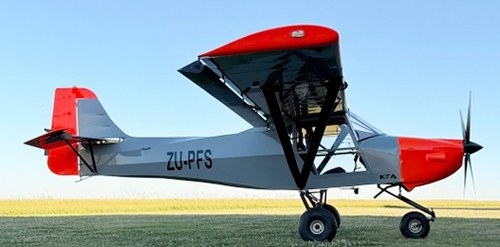
KFA introduces the Bushbaby Safari NWT (Nose Wheel Trainer)
Purpose-Built for Flight Training and Commercial Operations KFA introduces the Bushbaby Safari NWT (Nose Wheel Trainer), a production-built aircraft developed specifically for flight training and commercial operations. Produced under our part 148 (M715) approval.
Combining the rugged construction and features of our well-known bush planes with modern avionics, a spacious cockpit and economical operating costs, the Safari NWT is designed to meet the demands of busy flight schools.
Importantly, the Safari NWT also qualifies as a Light Sport Aircraft (LSA), making it suitable for use by LSA flight training schools as well as PPL level (Part141) ATO's.
The Safari NWT features a robust tricycle undercarriage with a free-castering nose wheel and KFA's proven Buffalo suspension system on the main wheels. Designed for frequent take-offs and landings, the aircraft is equally at home on paved, grass and gravel runways.
Standard tyres are 6.00 x 6 on all three wheels, with optional 8.00 x 6 main wheel tyres for rougher operating conditions. A standout feature is the 47-inch-wide cockpit, wider than that of a Cessna 182, offering excellent shoulder room and comfort for student and instructor alike. The generous cabin space also comfortably accommodates taller pilots.
The aircraft has a Maximum Take-Off Weight (MTOW) of 700 kg, with empty weights ranging from approximately 375kg to 440 kg, depending on configuration. A typical aircraft fitted with the 135 hp KFA turbo engine, three-blade constant-speed E-Prop propeller and 10” Dynon avionics weigh 400 kg.
KFA offers four engine configurations to suit different training requirements, operating environments and budgets.
All models feature Helices E-Prop propellers, with the entry-level aircraft equipped with a three-blade ground adjustable unit and turbo charged engines with the Constant speed unit.
The Safari NWT has a stall speed of below 40 knots in landing configuration, making it well suited to primary flight training.
Cruise speeds range from approximately 85 knots with the Rotax 912 ULS to 100 knots with the Rotax 916 iS, depending on configuration. With 110 litres of usable fuel, endurance ranges from 4.0 to 6.5 hours, depending on engine selection and fuel consumption.
The standard avionics package includes a 7-inch Dynon SkyView HDX EFIS, Dynon radio, intercom and Mode S transponder with ADS-B Out. Optional upgrades include larger Dynon displays (10” or 12” as main), a second D30, Skyview HDX 10-inch or 12” display, dual radios, IFR navigator, autopilot system and Garmin avionics.
The Safari NWT is designed for day and night VFR operations and can also be equipped for simulated instrument training under the hood, subject to the necessary equipment and operating approvals.
Its LSA classification further broadens its appeal, allowing LSA training schools to use the aircraft for applicable flight training programmes.

A Very Special Congratulations to Captain Karl Jensen!
Some aviation careers are measured in flight hours. Others are measured in the lasting impact they have on people, safety and the industry itself. Captain Karl Jensen's remarkable journey reflects both.

Karl's contribution to South African aviation spans more than six decades. His flying journey began with the South African Air Force in 1962, followed by his move to South African Airways in 1968. He went on to enjoy a distinguished career as an airline captain, including many years at the controls of the iconic Boeing 747.
His achievements over the years speak for themselves, including:
First place in the State President's Air Race.
SACAA Pilot of the Year.
World record holder for speed over a commercial air route.
Recipient of the Aero Club Gold Wings.
Recipient of the Dennis Jankelow Airmanship Trophy.
Yet Karl's influence extends far beyond his own accomplishments. His passion for aviation did not end with retirement. He has continued to give back to the industry by sharing his vast experience, encouraging good airmanship, promoting flight safety and helping to develop the next generation of pilots.
His love of flying - and of his own aircraft, ZU-VAL - continues to keep that passion alive.
Through Flight Focus, I have had the privilege of attending to ZU-VAL's radio station licence. It has been a real pleasure to be involved, even in a small way, with such a special aircraft and its remarkable owner.
Karl has also been incredibly supportive of Flight Focus and of my journey in the aviation industry. I am truly grateful for his encouragement, kindness and willingness to share his knowledge and experience.
I feel truly blessed to have crossed paths with someone whose history, expertise and passion have made such a meaningful contribution to aviation. People like Karl are part of the fabric of our aviation community, and their legacy deserves to be recognised and celebrated.
Karl, this recognition is richly deserved. Congratulations on an extraordinary career and on the lasting difference you continue to make. May there be many more happy hours in the skies ahead! ????
P.S. Karl, I hope you don't mind me putting the spotlight on you for a moment! You didn't ask for the attention, but I couldn't let an achievement like this go unrecognised. Some contributions deserve to be celebrated, and yours is certainly one of them!

Why the SANDF Should Consider Drones for Battlefield Resupply
Dewald Venter www.defenceweb.co.za
The fighting around Sake and Goma in the eastern Democratic Republic of the Congo (DRC) in January 2025 brought a basic logistics problem into sharp focus. Troops can only remain effective for as long as ammunition, medical supplies and other essential stores continue to reach them. Once those links are disrupted, the value of weapons, vehicles and even well-trained personnel begins to diminish.
This became evident as M23 forces moved towards Sake. The Southern African Development Community Mission in the DRC's (SAMIDRC's) main operating base came under increasing pressure, while Defence Minister Angie Motshekga later told Parliament that the position had effectively been surrounded by the advancing forces. South African troops remained in contact for several days under artillery and ground attack. Fourteen South African National Defence Force (SANDF) members were killed during the fighting around Sake and Goma.
Resupply soon became part of the problem. Reports at the time pointed to growing pressure on ammunition stocks and increasing difficulty in moving reinforcements and supplies by air. A resupply flight reportedly reached Goma on 26 January, but the worsening security situation and the loss of normal access to the airport made further support increasingly difficult.
The problem did not end when the most intense fighting subsided. By March 2025, President Cyril Ramaphosa described the SANDF position in Sake and Goma as “precarious”. Negotiations with the forces controlling the surrounding area included the movement of food and the provision of water and electricity. Sustaining the force had become part of the operational problem.
It would be an exaggeration to suggest that drones could have resolved what happened around Sake. The circumstances were far more complex than a simple failure of resupply. The experience nevertheless raises a legitimate question: what alternatives does the SANDF have when roads are cut, airfields are unavailable, and the normal means of moving supplies become too dangerous or cannot be used?
One option worth examining is a dedicated unmanned resupply capability for the final leg of the logistics chain.
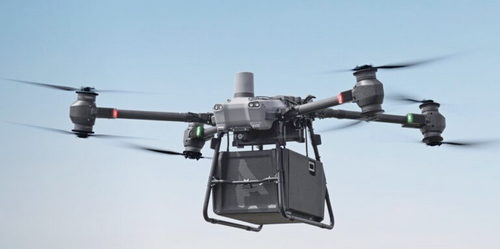
The requirement need not begin with a large or particularly sophisticated aircraft. A more useful starting point may be a platform capable of carrying between 25 and 50 kg over a radius of approximately 50 to 100 km, while operating without a prepared runway.
Those figures are modest when compared with the capacity of a truck or transport helicopter. That is precisely the point. A cargo UAV should not be expected to replace either.
Bulk logistics will continue to depend on trucks, transport aircraft and helicopters. Fuel, water, large ammunition loads and the daily requirements of a deployed formation cannot realistically be sustained by small, unmanned aircraft. The potential value of a drone lies in moving items that weigh comparatively little but are urgently needed.
Ammunition is an obvious example, but the requirement extends beyond it. Medical stores, blood products, radio batteries, communication equipment and specialised components may all become critical if a unit is isolated. A broken component weighing a few kilograms may disable an important piece of equipment. The replacement part does not require a truck. It requires a reliable way of getting from the logistics base to the unit that needs it.
This is where the idea of the “last tactical mile” becomes useful.
Imagine a forward position 60 km from a secure base. Under normal circumstances, the distance presents little difficulty. Once the road has been mined, observed or occupied by hostile forces, the same 60 km becomes a serious logistics problem. A helicopter might still reach the position, but using a crewed aircraft to deliver a relatively small load could expose people and an expensive platform to unnecessary risk. There may also be nowhere suitable to land.
A vertical take-off and landing UAV changes the options available to the commander. A fixed-wing VTOL design could depart from a small logistics area, fly efficiently over the required distance and deliver directly to a forward position without the need for a runway. A modular cargo arrangement would allow the load to change according to circumstances.
The case for such a system becomes stronger when viewed as a fleet rather than a single aircraft. Several smaller UAVs could be dispersed between logistics nodes. Mechanical failure or the loss of one aircraft would reduce capacity, but it would not necessarily stop the operation. The personnel implications are also different. Losing an unmanned cargo aircraft is not comparable with losing a helicopter and its crew.
The concept is not beyond South Africa's existing technological base.
Local companies already work across a wide spectrum of unmanned aviation. ALTI produces compact VTOL aircraft. Denel has accumulated considerable experience through the Seeker programme. Milkor has developed the considerably larger Milkor 380, while Paramount introduced the V-Raven VTOL platform at AAD 2026. The CSIR-supported Aerospace Industry Support Initiative has also assisted Kusasa Aerospace in developing a drone payload delivery system.
None of these systems is the answer to the SANDF logistics problem. They were designed for different roles and occupy different parts of the UAV market. Their significance lies in what they reveal about the domestic industrial base. South Africa already has experience in unmanned flight, composites, avionics, VTOL technology and systems integration.
The missing capability appears to sit somewhere between the smaller surveillance aircraft and the larger military UAVs.
That gap deserves investigation before any decision is made about procurement.
The SANDF could begin with a field trial built around a simple logistics problem. Establish a supply point, position forward elements at different distances and require participating systems to move representative loads between them. Range and payload would matter, but so would the time needed to prepare the aircraft for another flight. A system that carries an impressive load but spends hours on the ground between sorties may prove less useful than a smaller aircraft that can fly repeatedly.
Maintenance would also have to be considered from the outset. So would manpower.
A cargo drone intended for field deployment should not require a large technical team every time it moves. If operating the aircraft creates another complex supply and maintenance burden, part of its advantage is lost. The same applies to specialised launch equipment or fixed infrastructure. The attraction of the concept lies partly in its ability to operate from austere locations.
Trials would also need to move beyond ideal conditions.
Electronic warfare is now an ordinary feature of military operations. GPS interference disrupted communications and hostile counter-UAS systems cannot be treated as unusual circumstances. A logistics aircraft that depends entirely on uninterrupted satellite navigation and a permanent data link may be of limited value once it enters a contested environment.
Its behaviour after losing contact would therefore matter. So would its ability to follow a pre-programmed route and navigate when external systems become unreliable.
South African conditions introduce further practical questions. Heat and altitude affect aircraft performance. Wind and rain may reduce the load that can be carried or the distance that can be flown. Night operations introduce another set of requirements. These factors should be tested in the field rather than assumed from manufacturers' specifications.
There is also no reason to ignore the aircraft's vulnerabilities. Cargo UAVs can be shot down. They can be jammed, detected or forced off course. Operating drones alongside artillery, helicopters, and other aircraft creates an airspace management problem that would have to be addressed. A logistics UAV is not a means of avoiding all the difficulties associated with battlefield resupply.
Its usefulness lies in providing an alternative when the usual options are limited.
For that reason, the SANDF should first define the problem it wants the industry to solve. The initial requirement could remain relatively simple: move a militarily useful load over a tactically useful distance, operate without a runway, keep the ground-support requirement small and retain enough autonomy to function when communications are unreliable.
Industry could then demonstrate what is achievable.
This approach would also avoid designing a procurement programme around a particular aircraft before the operational requirement has been properly tested. Payload, range and configuration should emerge from experimentation rather than from assumptions about what the final system ought to look like.
The fighting around Sake deserves to be studied from this perspective. It was not only a combat action. It also provides a recent example of what happens when a deployed force finds its normal lines of supply increasingly constrained.
The SANDF may face similar circumstances again. Peace-support operations can place relatively small contingents far from established bases. Border deployments involve long distances and difficult terrain. Disaster relief may require supplies to reach communities after roads and bridges have failed.
In none of these situations would a cargo drone replace the existing logistics system. Its contribution would be narrower, but potentially significant.
Sometimes the decisive requirement is not another truckload of supplies. It is 25 or 50 kg of the right supplies reaching the right position before the existing logistics system can get there.
Sake provides a strong enough case for the SANDF to determine whether it should have that option.
Prof Dewald Venter from the Vaal University of Technology is Associate Professor in Tourism Management and Military Heritage Researcher.

Kenyan Army receives MD500s from South Korea
By Guy Martin www.defenceweb.co.za
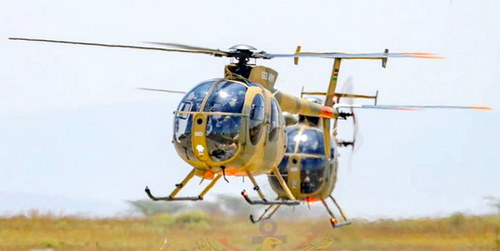
The Kenya Army Corps of Aviation (KACA) has inducted into service refurbished MD500 helicopters from South Korea, which will be used to equip a new unit to support United Nations peacekeeping missions.
The Kenyan Ministry of Defence said the helicopters were received on 23 October at Embakasi. In 2021, South Korea pledged to provide ex Republic of Korea Army MD500MD Defender helicopters to Kenya.
In December 2023, the first six of the 16 donated MD500s were shipped from the Korean Army Logistics Command's general maintenance depot in Jinhae to the US for repairs and maintenance before delivery to Kenya under US State Department auspices.
The Kenyan Ministry of Defence (MoD) did not state how many helicopters were delivered on 23 October, but imagery of the handover event showed at least five - in a statement, UN Under-Secretary-General for Peace Operations Jean-Pierre Lacroix announced the donation and thanked South Korea for supporting the UN's air mobility capabilities, saying eight aircraft were delivered.
“The US Government facilitated the installation of advanced digital systems on the helicopters and supported the training of Kenya Army pilots and technicians to enhance their skills in operating and maintaining the modernised aircraft,” the Kenyan Ministry of Defence said, adding, “this milestone marks an important step in the continued development of Kenya Army's military aviation capabilities and underscores the value of modern aircraft in supporting operational effectiveness.”
Speaking during the occasion, the Cabinet Secretary for Defence, Soipan Tuya, noted that the modernised MD500 helicopters would enhance the Kenya Defence Force's (KDF's) capabilities in reconnaissance, aerial support, mobility and critical security operations.
The Chief of the Defence Forces (CDF), General Charles Kahariri, commended the trilateral partnership between Kenya, the Republic of Korea and the United States, noting that it provides a strong foundation for enhanced security cooperation. He highlighted that the new capabilities would enhance security, counter-terrorism efforts, peace support operations and humanitarian assistance.
The Kenya Army Commander, Lieutenant General David Keter, expressed appreciation for the partnership between Kenya, the Republic of Korea and the United States, noting that the collaboration strengthens Kenya Army's aviation capabilities. He thanked the Government and people of the Republic of Korea for their support and commended the United States Government for providing the technical expertise required to install advanced digital systems on the aircraft.
Ambassador Kang Hyung-shik of the Republic of Korea underscored the deepening diplomatic, economic and security ties between the Republic of Korea and Kenya. He highlighted that the transfer of military equipment reflects mutual trust and a shared commitment to regional peace and stability.
Susan Burns, Chargé d' Affaires of the United States, underscored the importance of the trilateral security partnership between Kenya, the United States and the Republic of Korea in promoting regional stability and addressing shared security challenges. She noted that modernised military equipment and international cooperation strengthen Kenya's role as a trusted security partner, from counter-terrorism efforts in East Africa to peacekeeping missions abroad. She added that sustained investment in security creates the stability and confidence necessary for economic growth and long-term prosperity.
Brigadier General Jayson Becker, the Deputy Commanding Officer for the Combined Joint Task Force - Horn of Africa highlighted the trilateral partnership between Kenya, the United States and the Republic of Korea as a demonstration of their shared commitment to regional peace, stability and security. He described Kenya as a trusted partner and a key pillar in efforts to stabilise the Horn of Africa.
He noted that the helicopters, their technical support, training and Kenya's investment in human capital would strengthen capabilities to address complex security challenges in East Africa and beyond.
Kenya's military already operates the MD500, with 40 delivered by the United States between 1980 and 1985, along with 2 100 TOW anti-tank missiles. These were recently augmented by six new MD530Fs delivered from the US in December 2019. They were acquired to assist with operations in support of the AMISOM mission in Somalia (now AUSSOM).
The Kenya Army also operates nine AS550C3 Fennecs donated by the United Arab Emirates in 2018 and five Harbin Z-9W helicopters. The Air Force has a larger rotary wing fleet, comprising three Bell AH-1 Cobra attack helicopters, over a dozen MD500s, three Pumas, half a dozen Bell 205s, eight UH-1 Hueys, three AW139s and several Mi-171 helicopters.
Korean Air's aerospace division built some 280 MD500s under license between 1976 and 1984, but these are being replaced by newer aircraft, including the Korea Aerospace Industries (KAI) Light Armed Helicopter (based on the Airbus EC155 Dauphin).
The Kenya Defence Forces are considered to be the most powerful in East and Central Africa. They have built a reputation for comparative combat effectiveness and have taken part in a number of operations across Africa.
The KDF has established a reputation for competence, stemming from their experience in operations in various parts of Africa and beyond, having fought in neighbouring Somalia and taken part in numerous peacekeeping operations. Kenya is consistently among the top ten defence spenders in Africa, with the result that all three branches of the KDF are regarded as being well equipped, outclassing most of their fellow East African states.
While defence spending has declined slightly in real terms over the past decade, both the Kenyan Army and Air Force have seen a modest level of capital expenditure, allowing for the procurement of a limited number of more modern vehicles, aircraft, and other advanced weapon systems. This modernisation continues as the country fights terrorism mainly emanating from Somalia and participates in various AU and UN peace initiatives.

No Runway Required: Electra Takes Off and Lands Ultra Short Airplane at Manhattan Heliport
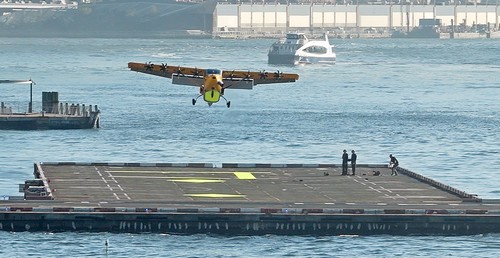
Electra today announced the successful takeoff and landing of its hybrid-electric Ultra Short aircraft at Downtown Skyport in Lower Manhattan, marking what is believed to be the first time a fixed-wing aircraft without vertical takeoff capability has landed at the heliport. The milestone capped a series of demonstration flights conducted over the past two weeks, culminating in a public event at Downtown Skyport today.
The demonstration, the latest in Electra's ongoing Life Beyond Runways series, showcases Direct Aviation, a new model for regional mobility that uses accessible air travel to connect passengers directly from where they are to where they want to go. Direct Aviation enables people to skip congested roads and crowded airport hubs for more accessible and efficient travel. Electra's Direct Aviation Market Outlook estimates potential time savings of approximately 3 hours and 45 minutes from New York City to Boston, 3 hours and 30 minutes to Washington, D.C., and 45 minutes to Philadelphia.
Over the past year, Electra has been showcasing its regional shuttle through novel demonstrations with a growing range of ecosystem partners and as an inaugural participant of the FAA's advanced air mobility integration pilot program. Partners include state aviation and airport authorities; leading FBO operators; real estate developers investing in urban and residential access points; and more than 60 airline operators intent on operating regional Direct Aviation routes.
Together, the Ultra Short aircraft and the emerging regional air services ecosystem are the unlock for Direct Aviation. Ultra Short aircraft combine a hybrid-electric propulsion system with blown-lift technology to take off and land in just 150 feet.
This capability opens up novel access points using existing infrastructure like heliports, barges, fields, and parking lots - no runway required. This runway independence has significant implications for both commercial and defense missions. The ecosystem is emerging now because the Ultra Short is the first airplane to meet six essential requirements for the scaling of advanced air mobility: helicopter-like access, quiet operations, fixed-wing affordability, safety, payload, and range. Only AAM aircraft that meet all six will become practical at scale.
The demand for shorter, more direct regional travel already exists. Americans make more than 35 million passenger driving trips every day across distances of 50 to 500 miles, including thousands of high-demand routes where Direct Aviation will save travelers significant total journey time. By bringing air services closer to where trips begin and end, Direct Aviation will turn hours behind the wheel or high-friction commercial short haul service into a quicker, simpler short regional flight. Whether for a business meeting, a weekend at the beach or mountains, or simply getting somewhere without losing most of the day in transit, Direct Aviation gets you there faster.
The historic flight marks the latest chapter in Electra's ongoing series of real-world demonstrations showing how Ultra Short aircraft can operate from places conventional fixed-wing aircraft cannot.
Electra has now proven this capability with its EL2 technology demonstrator across a growing range of access points, including Downtown Charleston, Bader Field in the heart of Atlantic City, Watertown International Airport, Snowshoe Mountain Resort, and more.
Additionally, the company, as part of the FAA integration pilot program, demonstrated helicopter-like instrument flight performance for non-congestive operations at commercial airports, like Roanoke-Blacksburg Regional, landing on and taking off from heliports.
Rather than replacing traditional aviation infrastructure, the Ultra Short creates a distributed layer of access around it. Electra is working with aviation operators, communities and public partners to build the Direct Aviation ecosystem out of these existing spaces, making them part of a connected regional air travel network.
For commercial operators, Ultra Short performance means bringing air travel closer to where people live, work and play. Existing heliports and other compact access points can become part of a Direct Aviation network connecting urban centers with other cities, regional communities and leisure destinations, without requiring every journey to begin and end at a major commercial airport.
For defense operators, that same Ultra Short takeoff and landing performance means the ability to move people, power and payload where traditional runway infrastructure is unavailable, damaged, threatened or impractical. Ultra Short access points can enable distributed operations and logistics without relying on large, fixed runways, instead using small operating areas closer to where personnel and materiel are needed.
Electra will continue its demonstration series across traditional aviation infrastructure and new Ultra Short access points as it advances the EL9 toward certification, production and service.

FAA Clears ALIA A250 for Customer Demonstration Flights
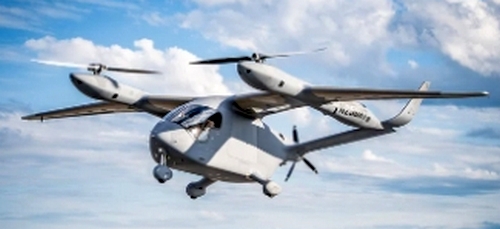
BETA Technologies, Inc. (NYSE: BETA) (BETA), an aerospace and defense company, today announced that the Federal Aviation Administration (FAA) has awarded its ALIA VTOL (A250) aircraft a Special Airworthiness Certificate for market surveys, marking the first such authorization granted to an electric vertical takeoff and landing (VTOL) aircraft.
“This authorization brings vertical flight closer to the people and places that will put it to work, building on BETA's track record of industry firsts. We completed the first crewed electric VTOL transition flight in 2024, we were first to receive market survey authorization for our conventional takeoff and landing aircraft (CTOL), and now we're first with our VTOL,” said Kyle Clark, founder and chief executive officer of BETA. “Operators can now experience the VTOL firsthand and begin planning how it fits into their businesses, from connecting communities to moving people and goods at a lower cost. This is an important step toward commercial adoption, and we're grateful to the FAA for developing the regulatory framework that makes these operations possible.”
BETA's A250 is an all-electric VTOL aircraft designed to operate from locations with or without runway access. Built with a simple, efficient design, the VTOL delivers lower operating costs, higher reliability, and industry-leading range and payload. The VTOL shares a common architecture and core technology foundation with BETA's ALIA CTOL aircraft; the same propulsion systems, flight control computers, batteries and charging systems, allowing flight experience, manufacturing investment, and operational learning to support both platforms. This stable configuration and simplicity of design across CTOL and VTOL align with the FAA's standards of safety.
The aircraft has dual pilot controls and is designed to be able to carry up to five passengers and more than 1,200 pounds of cargo, supporting missions across cargo and logistics, medical transportation, defense, and passenger operations. “Incredible things are happening in aviation thanks to President Trump and his commitment to innovation. The FAA's special airworthiness certification of BETA's A250 aircraft is another critical step towards enabling the future of flight in America,” said U.S. Transportation Secretary Sean P. Duffy. “I want to thank our incredible safety team at the FAA for their hard work and congratulate BETA on reaching this milestone. From bringing the next generation of aircraft online to modernizing our nation's air traffic control system - we are delivering generational wins for the flying public at record speed.”
The authorization, issued under Part 21 of the FAA's regulations, enables BETA to conduct flights with operators and key stakeholders, allowing them to experience the A250's capabilities firsthand and building the confidence and familiarity that drive market adoption. The approval also expands the geographic scope of BETA's operations, providing greater flexibility to demonstrate the capabilities of electric vertical flight across a wider range of operating conditions, subject to applicable FAA limitations.
“The FAA is committed to working with American innovators to safely integrate these new aircraft into our national airspace, while maintaining the rigorous safety standards that have made the United States a global leader in aviation,” said FAA Administrator Bryan Bedford.
BETA's A250 completed its first flight under the new authorization on October 20, 2026. In its first flight under the market survey authorization, the ALIA VTOL took off vertically from Plattsburgh International Airport (PBG) in New York, transitioned to wing borne flight and landed vertically at Patrick Leahy Burlington International Airport (BTV) in Vermont, covering 34 nautical miles in 20 minutes. As it works toward full type certification and commercial operations, BETA continues to expand real-world flight operations, build relationships and validate its technology across a growing range of applications.

Avior Labs unveils Callisto, its next-generation AI-driven autonomous VTOL drone
By Dean Wingrin www.defenceweb.co.za
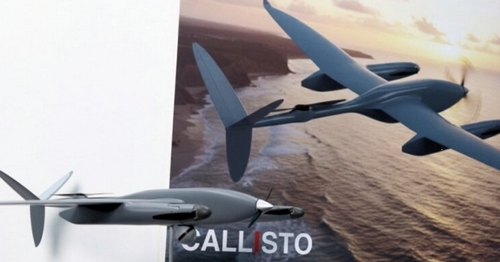
South African UAV developer Avior Labs is expanding its unmanned aircraft portfolio with Callisto, an all-electric vertical take-off and landing (VTOL) platform designed to combine extended endurance with onboard artificial intelligence and autonomous mission management.
Avior Labs, based in Irene, Gauteng, showcased the Callisto at the recent Africa Aerospace and Defence (AAD) exhibition in September. The aircraft represents a new approach to persistent surveillance, surveying and intelligence gathering, with an emphasis on onboard processing and reduced operator workload.
Founded in 2019, Avior Labs applies a defence aerospace engineering background and a simulation-led development philosophy to its aircraft. Founder and Managing Director Dr Bennie Broughton said this approach enables the company to predict performance before committing to hardware development.
“We don't fly anything without simulating it first,” he clarified. “We can predict with a very high level of accuracy what performance we are going to get out of the system long before we build it.”
Callisto is intended for border security, coastal and maritime patrol, search and rescue, and protection of pipelines, powerlines and railway infrastructure. Its surveying applications include wildlife management, game counting and vegetation monitoring across extensive areas, potentially exceeding 2 000 hectares per mission.
Callisto builds on lessons learned from the company's hugely successful smaller Elevation platform but represents a fundamental shift in design philosophy.
“Callisto is built to a large extent around its AI mission computer,” Broughton explained. “On Elevation, the AI that it does have on board, like object detection, is a payload function. In the case of Callisto, it's an aircraft function.”
At the heart of Callisto is a dedicated FPGA-based mission computer, supported by a proprietary software stack developed over several years. The architecture is designed to process sensor data, identify objects and prioritise information in real time, reducing reliance on continuous operator intervention and high-bandwidth communications.
Avior Labs has developed its own object-detection algorithms for aerial imagery, alongside software that monitors the aircraft's health. This includes identifying changes in vibration that could indicate a deteriorating motor or damaged propeller, as well as detecting certain control-system failures and reallocating control functions to compensate where possible.
Callisto's autonomy extends to mission planning. Rather than requiring operators to programme individual waypoints, the system allows them to designate an area of interest and specify a task, such as surveying terrain, patrolling a perimeter or monitoring an area for particular activity.
“We designate an area of interest on a map, and then we task the drone,” said Broughton. “We tell it what we'd like it to do in that area.”
The aircraft then determines how best to execute the mission, taking account of terrain and communications coverage.
An encrypted mesh datalink allows Callisto to communicate with other aircraft, ground units and network relays. Multiple drones can share information and coordinate their activities, enabling one aircraft to concentrate on a detected target while another expands its patrol area to cover the resulting gap. A reserve aircraft could also be tasked to launch when additional coverage is needed.
“The whole idea is it's all done in an automated way so that to the operator all of this is transparent,” Broughton noted. “He can focus on getting his ground units to deal with the target.”
Callisto has a wingspan of 3.6 metres and a maximum gross take-off weight of 15 kg, compared with Elevation's 2.5 metre wingspan and approximately 4.5 kg weight. Its modular mission bay is designed for a two kilogram payload, with scope for heavier configurations when an optional battery extender is removed.
Avior Labs is targeting flight times of four to eight hours, depending on the battery configuration, and a range of up to 580 km. These figures are intended to support missions requiring substantially longer persistence than conventional multirotor drones can provide.
Callisto was initially conceived as a hybrid-electric aircraft, as endurance requirements for missions such as border patrol and search and rescue have traditionally favored platforms with combustion engines. Recent improvements in battery technology and propulsion-system efficiency, however, prompted a rethink.
“When we started running the numbers using our own design capability and what we can push in terms of efficiency, it became clear to us that we can actually achieve sort of an entry-level hybrid type of performance, but with an all-electric,” Broughton said.
Different battery options will allow customers to balance endurance against acquisition and operating costs. A higher-energy-density battery is intended to support the upper end of the endurance range, although its cost and cycle life may not suit every operator.
The design also leaves open the possibility of a hybrid configuration for customers prioritising maximum endurance and already equipped to support combustion engines.
The aircraft's three-lift-rotor VTOL arrangement, featuring what the company describes as an over-actuated configuration, is intended to improve stability and control in demanding conditions. Avior Labs targets operation in ground-level winds of approximately 12-14 m/s and specifies IP55 protection against dust ingress and water. Actual mission capability will also depend on the environmental limits of the selected payload.
Broughton said this resilience is particularly important for time-critical missions: “The last thing you want is someone is in a capsized yacht off a coast, but you have to wait for the storm to pass before you can go look for the guy.”
Avior Labs is developing two configurations using the same basic airframe. One is intended for civilian and commercial operations; the other incorporates additional systems and software hardening for military environments.
Callisto remains at the prototype stage and is not yet in production. Broughton saids the company's experience establishing production processes for Elevation should help accelerate the transition once development and validation are complete.
Lockheed Martin to Add Air-Launched Hypersonic Missile to the American Arsenal of Freedom
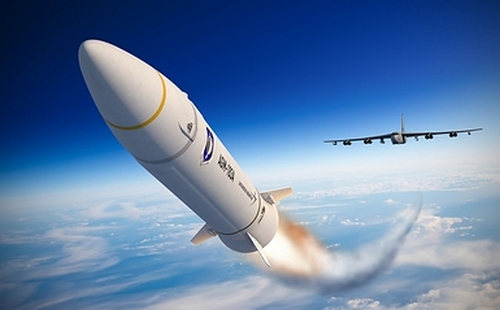
Lockheed Martin (NYSE: LMT) has been awarded a $694M contract from the U.S. Air Force for production of the Air-Launched Rapid Response Weapon (ARRW). The new capability brings sustained and maneuverable hypersonic capabilities to America's Arsenal of Freedom and is the culmination of years of developmental and test partnership between Lockheed Martin and the U.S. Air Force.
Integrated on the B-52, ARRW brings hypersonic strike capability that can be rapidly deployed to the U.S. Air Force. Its production readiness makes it an essential asset for the military, providing a critical capability to counter emerging threats.
Earlier today, Lockheed Martin broke ground on an expansion of Building P-20 in Troy, Alabama, that will add 47,000 square feet of production space for ARRW. The expansion will triple the current facility's production space and generate new American jobs over the next four years, adding to the almost 4,000 Lockheed Martin employees in the state of Alabama. The world-class facility will prepare the workforce to build ARRW using advanced manufacturing, robotics and digital technologies.
ARRW will travel at speeds greater than Mach 5, more than five times the speed of sound, to rapidly engage targets from significant standoff ranges.
ARRW is designed to operate in extreme environments through the use of advanced materials to manage extreme heat, an advanced technology package to maintain accuracy and lethality, and capability to overcome a wide range of defenses.
Lockheed Martin has already funded efforts, materials, and equipment required to start ARRW's production, underscoring the company's commitment to delivering this critical capability to the U.S. Air Force at speed and scale.
"The ARRW production contract award showcases Lockheed Martin's ability to develop and begin production on cutting-edge systems at unprecedented speed and scale," said Tim Cahill, president, Lockheed Martin Missiles and Fire Control. "ARRW expands our weapon systems portfolio and launches a critical, high-precision, and sustained hypersonic capability that will enhance the U.S. Air Force's strategic advantage across multiple domains."
 
The International Air Transport Association (IATA) hss Released New Data Demonstrating the Rising Cost Burden of Payment Processing
Airlines globally incurred $24.5 billion in payment costs to process $1.05 trillion in sales in 2025, a 10.4% increase in total costs versus 2023. That far exceeds the overall growth in travel sales over the same period, which was up 7.7% from $977 billion in 2023. The average cost per transaction was $5 per passenger. In comparison, IATA forecasts that airlines will make a net profit of $4.50 per passenger in 2026.
“The airline industry is hyper competitive, capital intensive and famously low margin. In such an environment every cost item needs to be looked at carefully. The fact that payment transaction costs are increasing faster than industry revenues is unsustainable and, despite significant technological advances, highlights the critical need for greater cost efficiency,” said Sandrine Le Borgne, IATA's Interim Director General and CFO.
Further analysis of the $24.5 billion cost of payments in 2025 revealed that: $20.7 billion (84.5% of the total) was related to payment fees or the direct cost of completing each transaction. $2.9 billion (11.8% of the total) was related to airline operating costs, including various payment systems, delayed cashflow, staff, and compliance. $0.9 billion (3.7% of the total) was lost due to fraud or uncollected sales. Cards accounted for the highest cost per transaction with average payment fees at 2.53%, higher than the estimated overall average of 1.97%. The lowest-cost payment options were at 0.01%.
IATA is exploring several solutions and guidance that will bring efficiency to payments to airlines including:
Introduce alternative, lower-cost forms of payment for passengers. The 2025 IATA Global Passenger Survey revealed that 29% of passengers prefer to use a digital wallet and 8% prefer a local instant payment solution.
IATA Pay and IATA Financial Gateway (IFG) help airlines meet the challenges of changing passenger preferences for payment. IATA Pay, which enables passengers to use local instant payment solutions to purchase travel, has been rolled out in 34 countries with 38 payment schemes. IFG is a platform that allows airlines and travel suppliers to manage, optimize, and control travel industry payments across multiple sales channels in more than 170 countries and using 300-plus payment methods.
Improve transparency on the cost of agency cards. Transparency In Payments is a solution that allows airlines to define their payment policy and framework within the IATA Billing & Settlement Plan (BSP). This enables airlines to take informed decisions on whether to accept an agency card as an alternative to a customer card or other cost-effective alternatives available through the BSP such as IATA EASY PAY.
Make corporate travel more cost-efficient. Taking the opportunity presented by the industry move to Offers & Orders, IATA is working with airlines and corporate customers to develop a new approach to corporate travel payments, designed to improve payment efficiency, simplify reconciliation, and provide richer data, while giving airlines and their corporate customers greater choice in how payments are managed.
Help airlines evaluate their payment options. IATA has developed the new Airline Payment Framework - Management Foundation, a framework that will assist airlines in aligning commercial, financial, and operational priorities to ensure that payments support both customer experience and financial performance needs.
“In addition to cost-efficiency, IATA research shows that providing passengers with alternative payment methods could also have a revenue-generating impact. About one in five ancillary purchase attempts are not completed because the initial payment attempt was refused and no other method was offered. Enabling more payment options has the potential to help airlines realize some of this lost revenue,” said Le Borgne.


First Flight of the Twin Engine Westland Welkin, a British Heavy Fighter
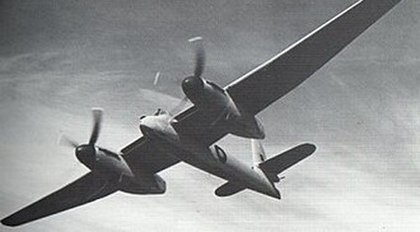
The twin engine Westland Welkin, a British heavy fighter was first conceived in 1940. Built in response to the arrival of modified Junkers Ju 86P bombers flying reconnaissance missions which suggested that the Luftwaffe might attempt to re-open the bombing of Britain from high altitude.
The threat never materialised; consequently, Westland produced only a small number of Welkins and few of those flew.


USA, Greenacres, FL: A Learjet 60, N722BD, impacted the ground in Greenacres, Florida. The aircraft disintegrated and a fire erupted. All nine people onboard perished. The flight departed Austin (AUS), Texas, at 15:37 UTC. Destination of the flight was North Eleuthera (ELH/MYEH), Bahamas. At the time the aircraft was approaching the Florida coast, a Convective SIGMET was active for southern Florida. Approaching Naples, Florida, at FL410, the flight requested a routing to FIMED and then direct to Freeport. This was approved by Miami ARTCC and the flight was instructed to descend to FL350. During their descent, the controller approved N722BD to deviate left or right to avoid weather. At 17:46 UTC, the flight radioed they were now heading direct to Freeport, reporting light clear ice and moderate turbulence. Outside air temperature was reported being -47°C and the crew stated the ice was manageable. As it was turning right on a course to Freeport, the flight reported increasing precipitation and their need to climb to FL370. This was approved by the Miami ARTCC controller. ADS-B data show the aircraft climbed to FL354. From that point on the aircraft made a descending right-hand turn and an increasing rate of descent to over -30000 feet per minute. During the descent, N722BD declared a Mayday, stating they were banking 60 degrees and at a high rate of descent. The aircraft impacted the side of South Military Trail, Greenacres, Florida at 17:50 UTC.
USA. near Belle Glade, FL: A Cirrus SR22 G7+, N98007, deployed its parachute for unknown reasons and came down in a field southwest of Belle Glade, Florida. The sole pilot was not injured. Preliminary ADS-B data shows that, in the moments leading up to the event, the airplane entered a climb to an altitude of 3,400 ft, but began a sudden right hand turn descent to an altitude of 900 ft. The autopilot was turned off at the conclusion of the turn and the airplane began a steep climb to 2,000 ft. The autopilot was turned on again, but at this point the airplane had decelerated to about 35 knots groundspeed. The CAPS was then deployed. Review of weather imagery and GFAs at the time of the event showed presence of marginal VFR conditions west of the accident site and the possibility of light rain east of the same area. The National Reflectivity Mosaic depicted very tiny echoes of 10 to 30 dbZ.
AUSTRALIA, Thurloo Downs station, 120km NW of Wanaaring NSW: The Australian Transport Safety Bureau (ATSB) has decided not to conduct an investigaton into a fatal light plane crash near Wanaaring on Thursday. A spokesperson for the ATSB said the transport safety investigator received a report that the pilot was conducting a private post maintenance test flight in a Cessna 337 from Thurloo Downs when the aircraft collided with ground and subsequently caught fire. The pilot and sole occupant of the plane - a man believed to be in his 60s - was located deceased at the scene. In a statement the ATSB spokesperson said, "After assessing the circumstances, the ATSB has determined not to conduct an investigation into this accident, in line with its investigation prioritisation hierarchy and the nature of the accident site."


![]()
Google Banner Ad
|
                              |